
In the wake of the COVID-19 pandemic, the EU launched the NextGenerationEU recovery fund to contain and mitigate the economic and social impact of the pandemic. More than €800 billion (current prices) are available to make the EU greener, more digital and more resilient. Member States decide on their national priorities in the so-called recovery and resilience plans.
NextGeneratioN EU in Detail
Under the motto ‘Make it Green’, NextGenerationEU contributes to environmental and climate protection. The aim is to increase water quality in rivers and seas, reduce waste and plastic waste and, for example, plant several billion trees. In cities, green spaces are to be created and increased use of renewable energies. Agriculture should also become more environmentally friendly.
Europe is set to become more digital in the next 10 years. ‘Make it digital’ is the motto with which NextGenerationEU promotes the digital transformation. EU-wide, 5G Internet should become the standard. The aim is to make it easier for citizens to access online public services with a digital identity (eID). Furthermore, cities should become more efficient and online shopping safer. Artificial intelligence is to be promoted, for example, for the fight against climate change or in the field of transport infrastructure.
In order to be better prepared against health crises in the future, NextGenerationEU includes the ‘Make it Healthy’ area. Cooperation between EU countries to protect against health threats is to be stepped up. Investments will also be made in research and innovation and the modernisation of health systems. Training for medical and nursing staff will be funded.
Young people are supported under the motto ‘Make it Strong’. The aim is to promote further training and apprenticeships, increase interest in the STEM sector and support young entrepreneurs with loans.
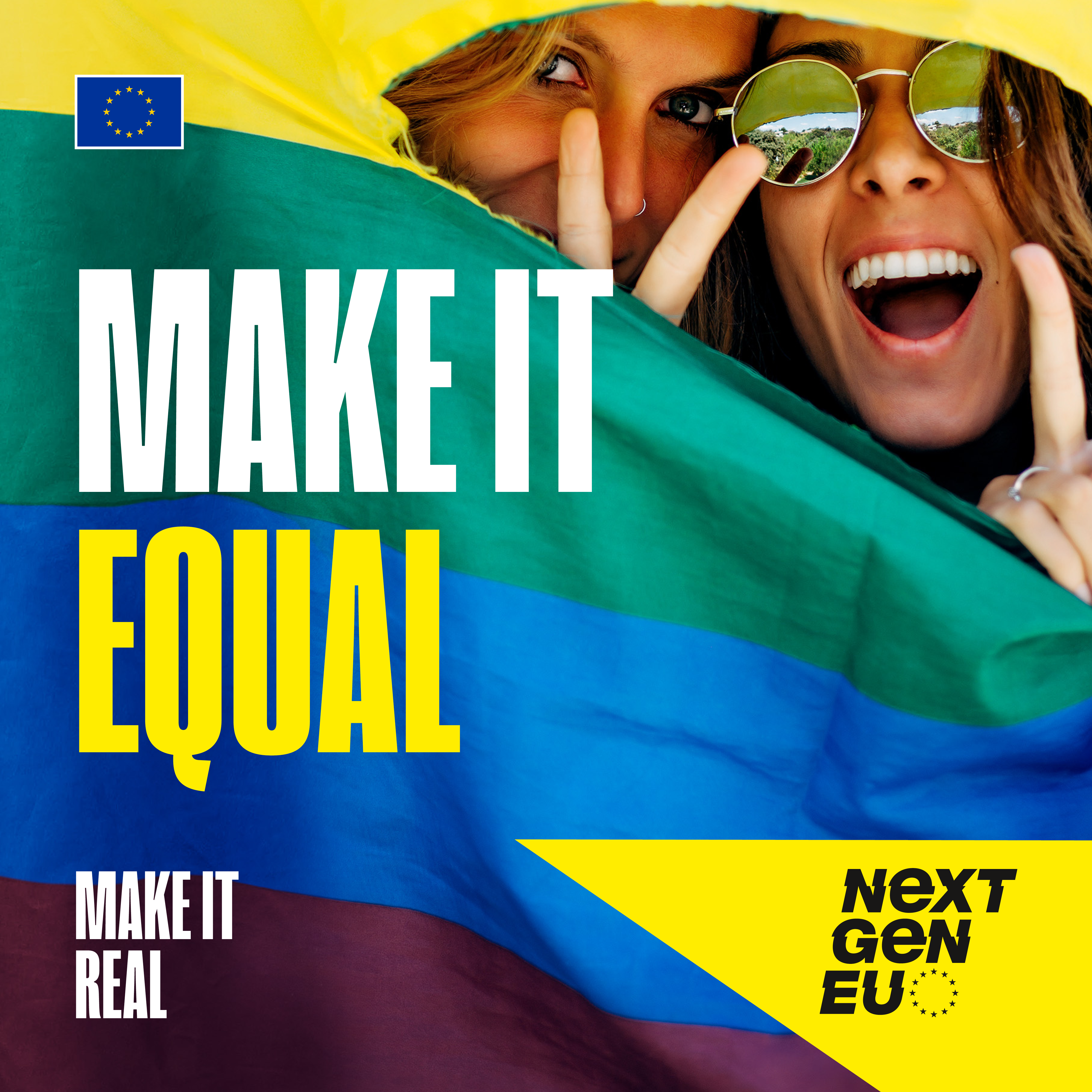
Finally, the aim is to strengthen Europe’s diversity under the motto ‘Make it Equal’. The aim is to combat racism and xenophobia, to strengthen gender equality and the rights of the LGBTQI+ community.
Budget
A total of €806.9 billion is available for NextGenerationEU. The largest share – EUR 723.8 billion – is accounted for by the so-called Recovery and Resilience Facility. It provides financial support to Member States, which then set out reforms and investment projects in national recovery and resilience plans.
Part of the financial resources for the Recovery and Resilience Facility are direct grants, while the other part is loans that need to be repaid by Member States. For the first time in history, the European Commission is taking up joint capital on the financial markets on behalf of the entire EU.
The European Commission's capital raising on behalf of the EU is limited in time until the end of 2026. The repayment of the loans provided to NextGenerationEU will take place from 2028 to 2058.
German Recovery and Resilience Plan
Germany is entitled to approximately EUR 28 billion from the Recovery and Resilience Facility. Of these, at least 42 percent will support climate goals and at least 52 percent will support the digital transition. Furthermore, 6 percent of German funds are to be invested in measures to strengthen economic and social resilience. This includes, for example, 500 million euros for an investment programme for childcare.
In concrete terms, around 1.5 billion euros will be used for investments in green hydrogen, 2.5 billion euros for the promotion of electric cars and 2.5 billion euros for a renovation programme to increase the energy efficiency of residential buildings.
Among other things, 1.5 billion euros will be invested for investments in microelectronics and communication technologies, 750 million euros for cloud infrastructure and services and 3 billion euros for the digitization of public services. In this area, for example, teachers will be equipped with laptops. The City of Nuremberg also benefits from these EU funds. Furthermore, the digitalization of the railway is to be promoted, also in Middle Franconia: In Ansbach and Triesdorf, the old interlockings are replaced by modern electronic interlockings.